
TCM beauty · Section guide
TCM beauty and skin care
In Chinese medicine, beauty care is the branch of skin practice concerned with how the face and body look, approached by reading and treating the internal pattern rather than the surface alone.

Start with a concern
Everyday appearance concerns read through a pattern, plus the condition pages that already cover the medical picture.


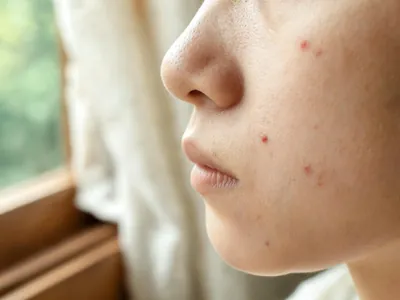 Acne痤疮Acne is treated by location and by what the lesions containIllustrationSkin condition · opens the main library
 Melasma黄褐斑Melasma is read as the face showing an internal stasisIllustrationSkin condition · opens the main library
 Rosacea酒渣鼻Rosacea is described as heat that risesIllustrationSkin condition · opens the main library
 Oily skin面垢Facial oil is read as the visible state of digestion and emotionIllustrationSkin condition · opens the main library
Face pattern check
Six questions about the face and the body, scored against the pattern pages, to show how the tradition would read the picture.
The check takes two minutes, stores nothing, and reads the face the way the tradition does: as a picture, not a diagnosis.
Start the face pattern checkRoutines
Short sequences built from steps that already exist on the practice pages.


Practices
At home, with a practitioner, and observation.
At home


With a practitioner and observation


Herbs for the face
The four herb pages and the twenty herb beauty cards, grouped by traditional use.
Even the complexion
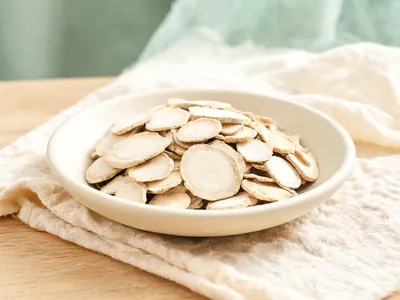 白附子 · bái fù zǐBai Fu Zi
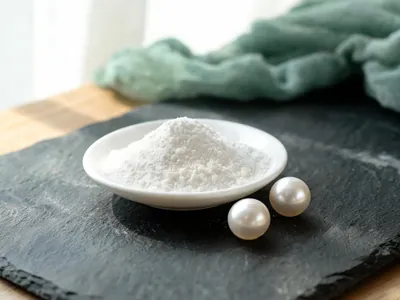 珍珠 · zhēn zhūZhen Zhu
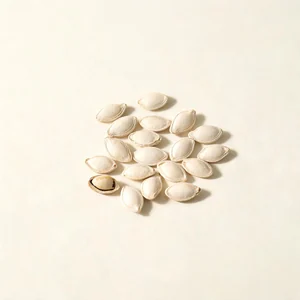 Ming Yi Bie Lu, 白瓜子 entry; SDong Gua ZiWinter melon seed is recorded in the classical materia medica as a face preparation that left the complexion l
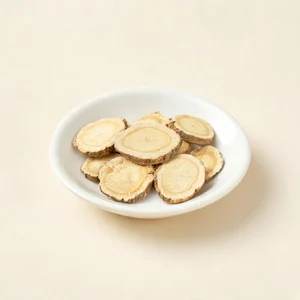 Shen Nong Ben Cao Jing, gradBai ZhiBai Zhi was used on the face to soften and smooth the skin, and it is a standard ingredient of the Tang facial
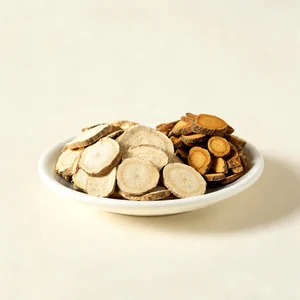 Qian Jin Yao Fang juan 6 xiaBai ZhuBai Zhu was a standard ingredient of Tang face washes for a sallow or uneven complexion.
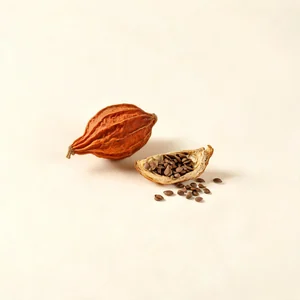 Ming Yi Bie Lu, Gua Lou entrGua LouThe Gua Lou seed was recorded as making the face lustrous, and it was ground into Tang face-wash powders.
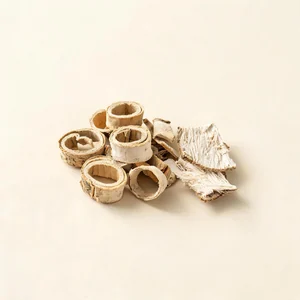 Qian Jin Yao Fang juan 6 xiaSang Bai PiMulberry root bark was used in a Tang hand-and-face wash for a smooth, lustrous complexion.
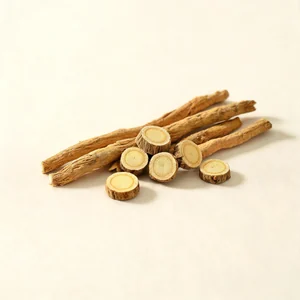 Qian Jin Yao Fang juan 6 xiaGan CaoLicorice was used in a Tang face treatment for dull, rough skin.
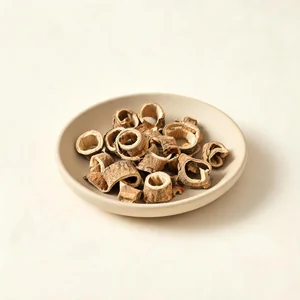 Qian Jin Yao Fang juan 6 xiaBai Xian PiDictamnus root bark was used in a Tang hand-and-face washing powder for a clear, even complexion.
 Corpus line 塗面,令人潤澤好顏色 (bookZhen ZhuPearl powder was applied to the face in the tradition for a smooth, lustrous complexion.
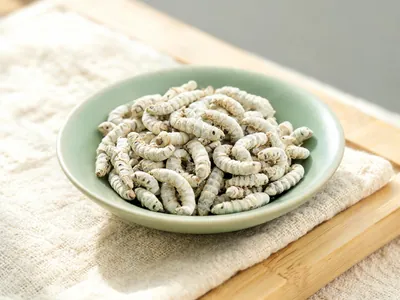 Qian Jin Yao Fang juan 6 xiaBai Jiang CanBai Jiang Can was one of the recurring white ingredients of Tang facial washes and creams.
 Hai Yao Ben Cao, grade and eBai Fu ZiBai Fu Zi was recorded as an excellent addition to facial preparations, and it appears in the Tang facial fats
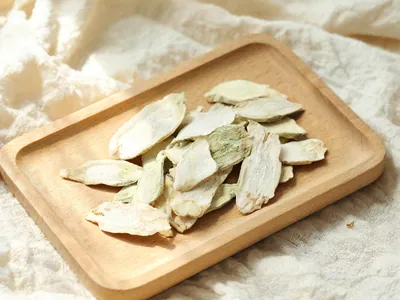 白及 · bái jíBai Ji
Nourish and moisten
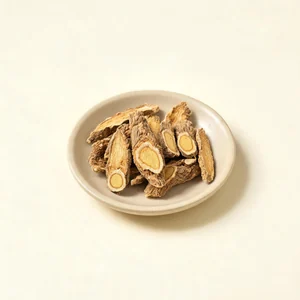 Qian Jin Yao Fang juan 6 xiaDang GuiDang Gui was included in Tang facial fats for dry, dull or unevenly coloured skin.
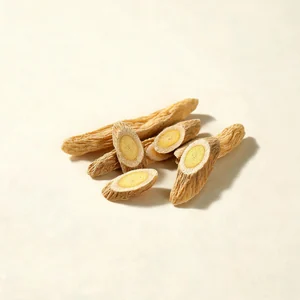 Qian Jin Yao Fang juan 6 xiaHuang QiHuang Qi appears in Tang preparations for skin that had lost its lustre and for withered, darkened faces.
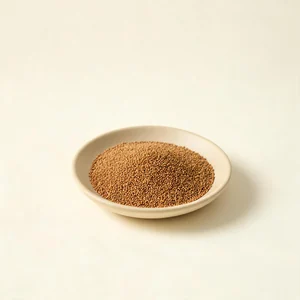 Yao Xing Lun (駐悅顏色); Qian JiTu Si ZiTu Si Zi was said in the Tang literature to preserve a fresh complexion, and it was used in face-wash powders.
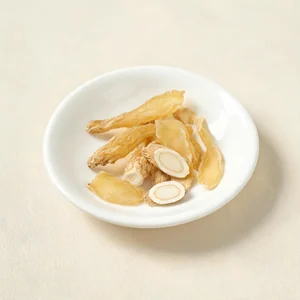 Qian Jin Yao Fang juan 6 xiaYu ZhuYu Zhu was used in Tang facial creams for dry, dull skin, and the materia medica records it as clearing facial
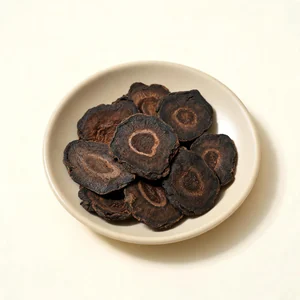 Kai Bao Ben Cao, grade and eHe Shou WuHe Shou Wu was recorded as darkening the beard and hair and improving facial colour.
Move the Blood
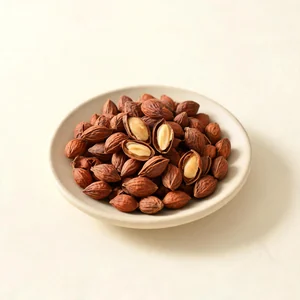
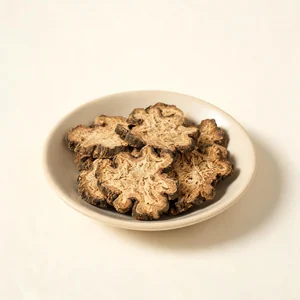
Drain Damp and settle the surface
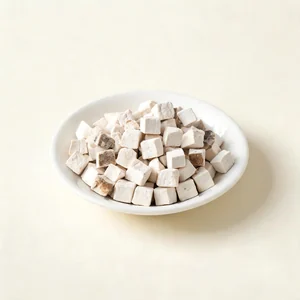 Qian Jin Yao Fang juan 6 xiaFu LingFu Ling, usually as Bai Fu Ling, was used in Tang washing powders and hand-and-face washes for a heavy, dull c
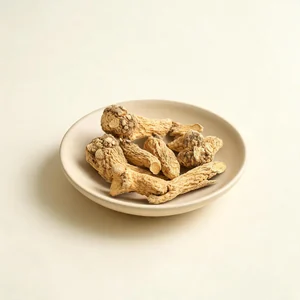 Qian Jin Yao Fang juan 6 xiaFang FengFang Feng was included in Tang facial preparations for wind-driven dullness and roughness of the face.
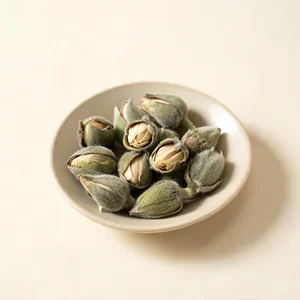 Qian Jin Yao Fang juan 6 xiaXin Yi HuaMagnolia flower was one of the aromatics used in Tang facial fats for the face and nose.
Lifestyle
Daily habits the tradition treats as skin care.


Common questions
Is TCM beauty the same as Chinese herbal skincare?
Only partly. A herbal mask or a herbal wash is one small part of the tradition. Most of the section is about patterns and practices: how a skin picture is read, what is traditionally done about it, and which habits are said to matter. The products side of skincare is not what this section is for, and the only product mentioned anywhere is the publisher's own cream, in a labelled block that makes no claim.
Do I need to see a practitioner to use this section?
Not for the self-care pages. Gua sha, acupressure, masks and steaming are written to be used at home, with the safety box before the steps. Cosmetic acupuncture and facial cupping are practitioner procedures, and their pages tell you what happens at an appointment rather than how to do it.
Can these practices replace treatment for acne or melasma?
No, and no page suggests they can. Acne, melasma and the other clinical conditions have their own pages in this compendium, and those pages describe assessment and treatment. The beauty pages may mention a condition, but only to link to it or to say when a practice should be avoided because of it.
Why does every page say traditionally used?
Because that is what most of this material is. The phrase separates what the tradition records from what has been tested, and the two are kept apart deliberately on every page. A tradition can be old, coherent and worth knowing without being evidence that the practice works.
Is it safe to try the self-care practices at home?
For most people, the gentle versions described here are low risk, provided the exclusions are respected and anything applied to the skin is patch tested first. The pages list who should not use each practice, and when to stop and see a doctor. If you are pregnant, on blood-thinning medication, or have a skin condition that is flaring, check with your practitioner or doctor first.
Does this section diagnose anything?
No. Face reading is described as one part of a full examination by a trained practitioner, not as a test you can run on a photograph or a mirror, and no page claims to diagnose a condition from the face. If a change in your skin concerns you, the right next step is a doctor or dermatologist.
About this section
What this section is
Chinese medicine has its own account of how the skin looks, and this section is where the compendium sets it out. The other five sections carry the clinical material, covering conditions, patterns, herbs, formulas and acupoints. This one carries appearance and care: the practices used on the face, the concerns people bring most often, and the daily habits that are said to show on the skin.
The subject is narrower than the word skincare and wider than the word cosmetic. It contains seven practice pages, three concern pages and three lifestyle guides, and it closes with the history of the field. It deliberately leaves out the clinical conditions that already have pages, among them Acne, Melasma and Rosacea, and more than twenty others.
One caution about the word beauty, because it shapes every page that follows. In this tradition the visible face is treated as an outcome rather than a target. What shows on the skin is read as a sign of what is happening inside, which is the subject of face-mapping.
The two ideas behind it
The first idea is that the face is read from the inside. Colour, lustre, moisture, and the place where a change appears are treated as signs of an internal pattern. A dull complexion with fixed discolouration is read differently from a pale and puffy one, and both differently again from a red and flushed one. The patterns that recur across these pages are the ordinary ones: Blood Deficiency, Liver Qi Stagnation, Damp-Heat and Qi And Blood Stagnation.
The second idea is that surface practice supports internal treatment rather than replacing it. Gua sha, a herbal mask or a course of facial acupressure is traditionally used to move Qi (气, the TCM idea of the body's moving and transforming energy) and Blood (血, the nourishing substance the face is said to depend on). None of it is a substitute for treating a condition, and none of it is framed here as a treatment.
That is why the pages keep returning to patterns, and why every practice page sets out the skin pictures it is traditionally used for. Bai Zhi (白芷, Dahurian angelica root) is a fair example. It has a long record as a facial ingredient, and the page on the masks that used it says what the tradition says and where the record comes from, without claiming a result. Where the internal treatment matters, the formulas carry it: the one most often given for the dull, dry picture is Si Wu Tang, and the page on face mapping explains why a practitioner reaches for it.
The seven practice pages
Seven pages cover practices. One is observation and six are hands-on.
face-mapping explains how the face is read, and it is the best place to start, because the rest of the section uses its vocabulary.
Four of the hands-on practices are self-care. gua-sha-face draws a smooth tool across oiled skin along the channels, with light pressure and no bruising. facial-acupressure presses named points with a fingertip. herbal-face-masks covers masks, washes and compresses made from herbs. facial-steaming covers steam and warm compresses, and it carries the burn warnings that any hot-water practice needs.
Two are practitioner procedures, and their pages describe what happens at an appointment rather than how to do it yourself. cosmetic-acupuncture uses fine needles. facial-cupping uses small cups with light suction. Neither of these is attempted at home.
The concern pages and the lifestyle guides
Three concern pages cover the everyday complaints that have no clinical page of their own: dark-circles, enlarged-pores and sensitive-skin. Each one sets out the patterns behind the concern, then self-care by pattern, then the conventional view, then when to see a doctor.
The conditions that do have their own pages stay on those pages. That includes Acne, Melasma, Skin pigmentation, Rosacea and Wrinkled and shrunken skin, and this section links to them rather than restating them. Where a concern and a condition page overlap, the condition page is the authority.
Three lifestyle guides cover the daily habits the tradition treats as skin care: eating-for-skin, seasonal-skin-care and sleep-stress-skin. They are organised by pattern and by season rather than by product, and they contain no calorie, weight or fasting advice.
How to read the evidence in this section
This page carries no evidence badge, and that is deliberate. A badge summarises one claim, while a section makes many, and some of them rest on nothing more than tradition. The Evidence section below therefore sets out the claims one at a time and says which have been tested in people and which have not.
Most of what this section describes is traditional use, which is not evidence that a practice works. A small number of practices have one or two small studies, described on their own pages with the design and the limitations. None of those studies is a reason to expect a result. The history page, classical-beauty, explains why the old texts are read as history rather than as instructions.
Safety across the section
Safety across the section
The safety rules are repeated on each page, and they are worth gathering in one place.
Nothing in the self-care pages is suitable for broken skin, an active infection, an eczema or rosacea flare, or skin that has just had a cosmetic procedure. Anything applied to the skin gets a patch test first, on the inner forearm, over 24 hours. Needling and cupping on the face are practitioner procedures, and there are no instructions for doing either at home anywhere on this site.
Where a page names a point that is classically avoided in pregnancy, it says so beside the point, and the same applies to any herb that carries a pregnancy warning on its own page.
Stop and see a doctor for spreading redness, pain, swelling, blistering, bruising that does not fade, a mole that is changing, or any eye symptom. Nothing on this site treats those signs.
Evidence
No badge is given for the section as a whole, because the claims differ too much. The position starts with the gap.
What the studies did not test. No verified human study tests face reading, facial acupressure, facial cupping, facial steaming, herbal masks as a class, or any Chinese medicine treatment for dark circles, enlarged pores or sensitive skin. Nothing on those pages rests on tested evidence, and none of them is described as a result.
What a study did test, and only this. These are the human studies we found on PubMed (searched October 2026). Facial gua sha changed measured facial contour and muscle tone: one randomised trial of 34 women, on gua-sha-face. Facial cosmetic acupuncture changed measured elasticity and frown-line scores: one single-arm pilot of 28 women and one randomised wait-list trial of 72 women, on cosmetic-acupuncture. Both are small, and neither is evidence of a lasting cosmetic effect.
Studies of the underlying relationship, not of this tradition. That sleep quality and psychological stress are associated with skin measures: human studies exist, described on sleep-stress-skin. That season changes skin surface measures: observational studies exist, described on seasonal-skin-care. That diet affects acne: randomised trials exist, described on eating-for-skin. None of these tests the framework built on top of the relationship.
Where these practices come from: Beauty in classical Chinese medicine
Sources
Clinical studies
- Ahn SH, Hwang UJ, Han HS, et al. 2025. Comparative Effects of Facial Roller and Gua Sha Massage on Facial Contour, Muscle Tone, and Skin Elasticity: Randomized Controlled Trial.. Journal of Cosmetic Dermatology. PMID: 40439289. Randomised controlled trial, gua sha versus facial roller; 34 women aged 20 to 50; limits: No untreated control group; instrumental outcomes; 8-week follow-up only
- Yun Y, Kim S, Kim M, et al. 2013. Effect of facial cosmetic acupuncture on facial elasticity: an open-label, single-arm pilot study.. Evidence-Based Complementary and Alternative Medicine. PMID: 23983778. Open-label, single-arm pilot; 28 eligible, 27 completed; limits: No control group; self-assessment as a secondary outcome; authors call for controlled trials
- Haghir H, Yazdanpanah MJ, Farahmand SK, et al. 2025. Is Acupuncture Effective in Diminishing Frown Lines? Evidence From a Randomized Controlled Trial.. Journal of Cosmetic Dermatology. PMID: 40193060. Randomised wait-list controlled trial; 72 women aged 30 to 59; limits: Wait-list rather than placebo control; assessor blinding not described in the abstract
- Oyetakin-White P, Suggs A, Koo B, et al. 2015. Does poor sleep quality affect skin ageing?. Clinical and Experimental Dermatology. PMID: 25266053. Cross-sectional comparison of good and poor sleepers; 60 women; limits: Associational, small, and self-reported sleep quality
- Nam GW, Baek JH, Koh JS, et al. 2015. The seasonal variation in skin hydration, sebum, scaliness, brightness and elasticity in Korean females.. Skin Research and Technology. PMID: 24528115. Longitudinal observational study over 13 months; 89 women; limits: One country and one ethnic group; observational
- Smith RN, Mann NJ, Braue A, et al. 2007. A low-glycemic-load diet improves symptoms in acne vulgaris patients: a randomized controlled trial.. The American Journal of Clinical Nutrition. PMID: 17616769. Randomised controlled dietary trial; 43 men aged 15 to 25; limits: The diet also caused weight loss, so the independent effect cannot be separated