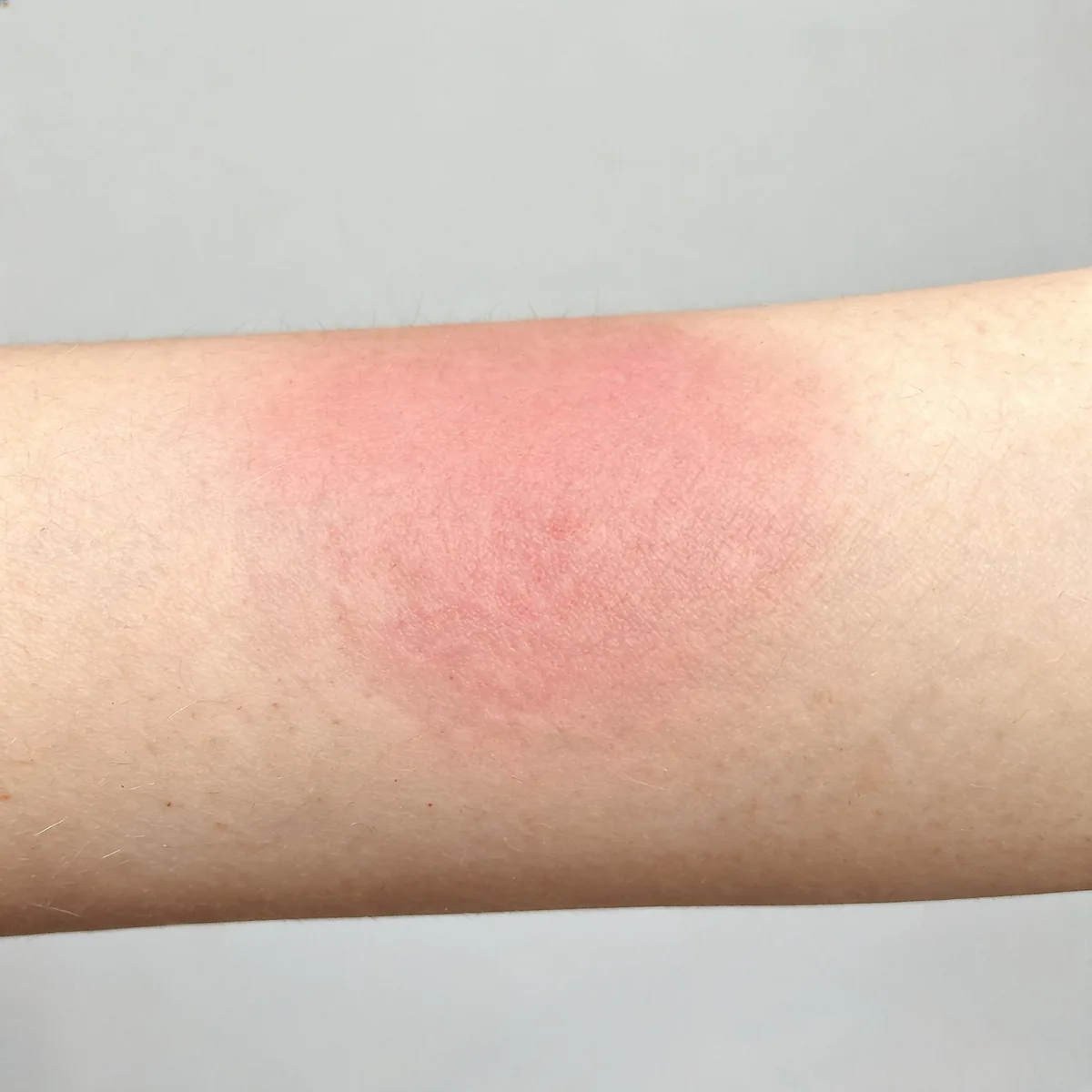
Which type is yours?
Skin that feels warm can mean heat stuck at the surface, heat generated inside, or heat from emptiness. The way it behaves - dry or moist, day or night - tells the practitioner which.
Damp-Heat
Warm moist skin with heaviness, greasy coating and sticky taste.
Looks like: Skin feels warm and moist rather than dry and hot
Read about this typeWind-Heat
Warm skin especially on face with chills and sore throat.
Looks like: Skin warm to the touch especially face and body; Red tongue tip with thin yellow coating
Read about this typeHeat in the Blood
Deep warmth not relieved by cooling, worse at night.
Looks like: Intense deep skin warmth not relieved by external cooling; Bright red eruptions or rashes
Read about this typeLiver Qi Stagnation that transforms into Heat
Warmth triggered by stress with rib-side pain.
Looks like: Skin warmth triggered or worsened by emotional stress; Distending or burning pain along the ribs
Read about this typeEmpty-Heat caused by Yin Deficiency
Warm dry skin at night with sweats and malar flush.
Looks like: Skin feels warm but dry, not sweaty
Read about this typeDamp-Warmth
Muffled heavy warmth worse in humid weather.
Looks like: Not specified
Read about this typeNot sure which? Take the Pattern check
Compare the typesWhere the spots sit, what they look like, the tongue and the main formula
Six patterns are described, and they are separated by three questions: does the skin feel moist or dry, when is the warmth worst, and what brings it on. Moist warmth that swells and weeps is Damp-Heat, an excess of moisture and heat trapped in the skin. Warmth with chills, a sore throat and a sudden onset is Wind-Heat, a surface invasion. Heat that sits deep, ignores cold compresses and burns worse at night has entered the Blood. Warmth that flares with frustration, alongside rib-side distension and a bitter taste, is Liver Qi that has turned into fire. A dry low-grade warmth with hot palms and night sweats is empty heat from Yin deficiency, and a heavy muffled warmth that lingers in humid weather is Damp-Warmth. Four of the six are excess, one is deficiency, and one is dampness with heat that has settled slowly, so the direction of treatment differs sharply between them.
| Pattern | Key signs | Tongue |
|---|---|---|
| Damp-Heat | Skin feels warm and moist rather than dry and hot | Body: Red, often swollen with teeth marksCoat: Yellow, greasy and thick, usually in the middle and at the root |
| Wind-Heat | Skin warm to the touch especially face and body; Red tongue tip with thin yellow coating | Body: Red at the tip and edgesCoat: Thin yellow or white turning yellow |
| Heat in the Blood | Intense deep skin warmth not relieved by external cooling; Bright red eruptions or rashes | Body: Deep red, often with red points or pricklesCoat: Thin, yellow and dry |
| Liver Qi Stagnation that transforms into Heat | Skin warmth triggered or worsened by emotional stress; Distending or burning pain along the ribs | Body: Red, with the sides redder than the centreCoat: Yellow |
| Empty-Heat caused by Yin Deficiency | Skin feels warm but dry, not sweaty | Body: Red, thin and dry, often crackedCoat: Little or none; the tongue may look peeled |
| Damp-Warmth | Not specified | Body: Red, slightly swollenCoat: Yellow and greasy |
Damp-HeatWarm moist skin with heaviness, greasy coating and sticky taste.
Avoid in pregnancy Caution in pregnancy
Warm moist skin with heaviness, greasy coating and sticky taste.
Moisture and heat have become stuck together, and the body can clear neither through digestion nor through urine. The dampness makes the skin heavy, puffy and clammy; the heat keeps it warm and reddens it. The result feels like a hot wet cloth held against the body, and it does not fade when the room cools.
The tongue is red with a yellow greasy coat and may be swollen with teeth marks; the pulse is soggy and rapid, or slippery and rapid. Humid weather, greasy fried food, sugary drinks, alcohol and long sedentary days all make it worse, while a cool room, light bland meals, gentle exercise and keeping the skin clean and dry help. Long Dan Xie Gan Tang drains the Damp-Heat, Ku Shen and Fu Ling dry and leach it, and LI-11 (Quchi), SP-9 (Yinlingquan) and SP-10 (Xuehai) cool and clear it.
Signs
- Skin feels warm and moist rather than dry and hot
- Heaviness in body and head
- Greasy yellow coating
- Sticky or bitter taste
Diet and lifestyle for this pattern: Eat cooling, Dampness-draining food such as mung beans, barley, cucumber and bitter gourd, and avoid greasy, fried, sweet and spicy food as well as alcohol, which all generate more Dampness and Heat. Keep the skin clean and dry in breathable fabrics, and aim for gentle daily movement such as walking or yoga to help the body process fluids.
Wind-HeatWarm skin especially on face with chills and sore throat.
Avoid in pregnancy Caution in pregnancy
Warm skin especially on face with chills and sore throat.
Wind-Heat arrives at the surface and disturbs the Defensive Qi that patrols it. The Qi stagnates, friction turns into heat, and that heat radiates outward, so the skin is warm under the hand, most of all across the face and trunk. Because the pathogen is being pushed back out, the warmth comes with mild chills, a sore throat and a slight sweat that brings no relief.
The tongue shows red at the tip and along the edges, under a coat that is thin and yellow, or white shading into yellow; the pulse floats and runs above ninety beats a minute. Draughts, spicy and greasy food, overwork and stress all worsen it, while rest, a cool room, cool drinks and light meals ease it. Yin Qiao San releases the exterior and clears the heat, Jin Yin Hua, Lian Qiao and Bo He carry that action, and LI-4 (Hegu), LI-11 (Quchi) and DU-14 (Dazhui) expel the pathogen and cool the surface.
Signs
- Skin warm to the touch especially face and body
- Mild chills
- Sore throat
- Red tongue tip with thin yellow coating
Diet and lifestyle for this pattern: Rest in a cool, well-ventilated room. Drink plenty of water and herbal teas such as chrysanthemum or mint, avoid spicy, fried or greasy food that generates internal Heat, and choose light, easy food such as congee.
Heat in the BloodDeep warmth not relieved by cooling, worse at night.
Avoid in pregnancy Caution in pregnancy
Deep warmth not relieved by cooling, worse at night.
Heat that has moved past the surface and into the Blood agitates it and pushes it toward the skin. The warmth then feels as though it comes from inside the body, and no amount of external cooling touches it. It is worst at night, when Yin should be settling the body but the pathogenic heat overrides it, so the person is restless, flushed and thirsty for cold drinks.
The tongue body is red with red spots or prickles under a thin dry yellow coat; the pulse is rapid, often wiry and forceful. Spicy food, alcohol, stress, hot weather and overwork all feed it, while a cool room, cold drinks, rest and cooling food let the blood settle. Shui Niu Jiao (water buffalo horn) and Mu Dan Pi are the herbs named for this pattern, cooling the blood and clearing stasis, and SP-10 (Xuehai), LI-11 (Quchi) and DU-14 (Dazhui) draw the heat out.
Signs
- Intense deep skin warmth not relieved by external cooling
- Heat worse at night
- Bright red eruptions or rashes
- Restlessness and irritability
Diet and lifestyle for this pattern: Avoid spicy, greasy and heating food such as chilli, lamb and alcohol. Eat cooling, blood-nourishing food such as cucumber, mung beans and watermelon, keep the environment cool and avoid overexertion, and use gentle activity such as walking or tai chi to circulate Qi without overheating.
Liver Qi Stagnation that transforms into HeatWarmth triggered by stress with rib-side pain.
Avoid in pregnancy Caution in pregnancy
Warmth triggered by stress with rib-side pain.
The Liver keeps Qi moving smoothly. When frustration, stress or swallowed anger builds up, the flow stalls, and stalled Qi heats up much as friction does. That heat rises, reaching the face, chest and flanks, so the skin flushes and warms in step with the mood rather than with the temperature of the room.
The tongue is red with redder sides under a yellow coat; the pulse is wiry and rapid, most clearly at the left Guan. Stress, spicy food, alcohol and coffee make it flare, while rest, cooling food and gentle movement ease it. Dan Zhi Xiao Yao San soothes the stagnation and clears the heat, Chai Hu, Zhi Zi and Mu Dan Pi do the moving and cooling, and LR-3 (Taichong), LR-2 (Xingjian) and LR-14 (Qimen) release the channel and settle the rising heat.
Signs
- Skin warmth triggered or worsened by emotional stress
- Distending or burning pain along the ribs
- Irritability and explosive anger
- Bitter taste in the mouth
Diet and lifestyle for this pattern: Avoid spicy, greasy and fried food, which add Heat. Favour cooling greens such as cucumber, celery and chrysanthemum tea, keep moving gently, especially walking or stretching, so Qi flows and stagnation does not build, and make time to unwind each day, since even a few minutes of deep breathing can stop Heat accumulating.
Empty-Heat caused by Yin DeficiencyWarm dry skin at night with sweats and malar flush.
Avoid in pregnancy Caution in pregnancy
Warm dry skin at night with sweats and malar flush.
Yin is the cooling, moistening half of the body. When it is used up by age, overwork, late nights or long illness, nothing holds the Yang in check, and a low-grade heat drifts to the surface. The warmth is dry rather than sweaty, and it is at its worst in the evening and at night, when Yin should be strongest. The palms, soles and cheekbones feel hot and night sweats wake the person.
The tongue is red, thin and dry with cracks and little or no coat; the pulse is fine and rapid and weakens under deeper pressure. Overwork, late nights, spicy food, hot weather and heavy sweating all deplete Yin further, while rest, cool air, moistening food such as pear and tofu and gentle exercise conserve it. Zhi Bai Di Huang Wan nourishes the Kidney Yin and clears the empty heat, Dang Gui Liu Huang Tang is used when night sweats dominate, Zhi Mu and Huang Bo carry the cooling, and KI-3 (Taixi), SP-6 (Sanyinjiao), KI-6 (Zhaohai) and HT-7 (Shenmen) are the points.
Signs
- Skin feels warm but dry, not sweaty
- Worse at night or in the evening
- Five-palm heat
- Night sweats
- Flushed cheekbones
Diet and lifestyle for this pattern: Eat cooling, moistening food such as pear, tofu, cucumber and watermelon, and avoid spicy, fried and overly heating food. Prioritise rest and avoid late nights, since overwork depletes Yin, and choose gentle exercise such as tai chi or walking over intense workouts.
Damp-WarmthMuffled heavy warmth worse in humid weather.
Avoid in pregnancy Caution in pregnancy
Muffled heavy warmth worse in humid weather.
Damp-Warmth is dampness and heat that have settled slowly and now clog the flow of Qi. The heat cannot escape, so it leaks outward as a persistent warmth that sits on the skin like a wet blanket, dull rather than sharp. Humid weather reproduces the dampness already inside and deepens the whole picture, the head feels foggy, and the chest and upper abdomen feel stuffy while appetite drops away.
The tongue is red, slightly swollen and covered by a yellow greasy coat; the pulse is soggy and rapid, especially at the right Guan. Humid heat, greasy fried or sweet food, overeating, sitting for long periods and emotional stress all aggravate it, while light bland meals, gentle movement, a dry aired room and loose cool clothing help. San Ren Tang clears the dampness and moves the Qi, Huo Xiang, Yi Yi Ren and Xing Ren do the aromatic drying and draining, and SP-9 (Yinlingquan), ST-40 (Fenglong) and REN-12 (Zhongwan) resolve it.
Signs
- Low-grade muffled warmth that feels heavy and damp
- Worse in humid or rainy weather
- Stuffy chest and upper abdomen with poor appetite
- Mental fogginess
Diet and lifestyle for this pattern: Eat light, plain food such as barley, lightly cooked vegetables and small amounts of lean protein, and avoid greasy, fried, sweet and dairy-heavy meals that create more Dampness. Stay in a dry, aired space and take gentle walks so Qi moves without overexertion.
What you can do
Start with the daily measures that match your type. Herbs and formulas come after these, and only with a practitioner.
- Damp-Heat: Eat cooling, Dampness-draining food such as mung beans, barley, cucumber and bitter gourd, and avoid greasy, fried, sweet and spicy food as well as alcohol, which all generate more Dampness and Heat. Keep the skin clean and dry in breathable fabrics, and aim for gentle daily movement such as walking or yoga to help the body process fluids.
- Wind-Heat: Rest in a cool, well-ventilated room. Drink plenty of water and herbal teas such as chrysanthemum or mint, avoid spicy, fried or greasy food that generates internal Heat, and choose light, easy food such as congee.
- Heat in the Blood: Avoid spicy, greasy and heating food such as chilli, lamb and alcohol. Eat cooling, blood-nourishing food such as cucumber, mung beans and watermelon, keep the environment cool and avoid overexertion, and use gentle activity such as walking or tai chi to circulate Qi without overheating.
- Liver Qi Stagnation that transforms into Heat: Avoid spicy, greasy and fried food, which add Heat. Favour cooling greens such as cucumber, celery and chrysanthemum tea, keep moving gently, especially walking or stretching, so Qi flows and stagnation does not build, and make time to unwind each day, since even a few minutes of deep breathing can stop Heat accumulating.
- Empty-Heat caused by Yin Deficiency: Eat cooling, moistening food such as pear, tofu, cucumber and watermelon, and avoid spicy, fried and overly heating food. Prioritise rest and avoid late nights, since overwork depletes Yin, and choose gentle exercise such as tai chi or walking over intense workouts.
- Damp-Warmth: Eat light, plain food such as barley, lightly cooked vegetables and small amounts of lean protein, and avoid greasy, fried, sweet and dairy-heavy meals that create more Dampness. Stay in a dry, aired space and take gentle walks so Qi moves without overexertion.
Everyday habitsDiet and routine advice for every type
- Favour cooling hydrating food such as cucumber, watermelon, celery, mint and mung beans, and avoid spicy and deep-fried food.
- Cooling and hydrating food is the base - mung beans, celery, watermelon, cucumber and mint - with spicy, deep-fried and greasy food, alcohol and coffee reduced, because all of them add heat. Damp-Heat and Damp-Warmth do better on light bland meals with barley, bitter gourd and little sugar or dairy; blood heat suits cucumber, mung bean and watermelon; Liver stagnation responds to cooling greens such as celery and chrysanthemum tea; Yin deficiency needs moistening food such as pear, black sesame and tofu, and late meals and late nights are best avoided because both deplete Yin.
Beauty practices:
What a practitioner might use
Herbs are prescribed to the pattern by a qualified practitioner. Do not self-prescribe.
Avoid in pregnancy Caution in pregnancy
Acupoints 13
Herbs 13
- Ku Shen 苦参Caution in pregnancy
- Fu Ling 茯苓
- Jin Yin Hua 金银花Caution in pregnancy
- Lian Qiao 连翘Caution in pregnancy
- Bo He 薄荷Caution in pregnancy
- Mu Dan Pi 牡丹皮Avoid in pregnancy
- Chai Hu 柴胡Caution in pregnancy
- Zhi Zi 栀子Caution in pregnancy
- Zhi Mu 知母
- Huang Bo 黄柏Caution in pregnancy
- Huo Xiang 藿香Caution in pregnancy
- Yi Yi Ren 薏苡仁Caution in pregnancy
- Xing Ren 苦杏仁Caution in pregnancy
What each one is used for is in the notes below.
Herbs, formulas and acupointsPrinciples, the herbs and points used, and what to expect
Avoid in pregnancy Caution in pregnancy
How the tradition treats warm skin, with the herbs, formulas and points used for it.
Principles
- Measure fever and assess systemic illness before treating warmth as a pattern.
- Clear heat and drain dampness where the skin is warm and moist.
- Cool the Blood where warmth is deep and worse at night.
- Nourish Yin where the warmth comes from deficiency, and address stress where heat flares with emotion.
- Clearing heat is shared, but the route differs. Excess patterns are drained - Dampness dried, blood cooled, Wind-Heat vented - while deficiency heat is treated by restoring the fluids that should be holding it in check, which is why Zhi Bai Di Huang Wan and Dang Gui Liu Huang Tang nourish rather than purge. Mixed pictures are common, and bitter cold herbs used for too long will damage the Spleen, so the cooling is reduced as the heat subsides.
Herbs used
Formulas
- Long Dan Xie Gan Tang
- Yin Qiao San
- Dan Zhi Xiao Yao San
- Zhi Bai Di Huang Wan
- Dang Gui Liu Huang Tang
- San Ren Tang
Acupoints
- LI-11 (Quchi)
- SP-9 (Yinlingquan)
- SP-10 (Xuehai)
- LI-4 (Hegu)Avoid in pregnancy
- DU-14 (Dazhui)
- LR-3 (Taichong)
- LR-2 (Xingjian)
- LR-14 (Qimen)
- KI-3 (Taixi)
- SP-6 (Sanyinjiao)Avoid in pregnancy
- KI-6 (Zhaohai)
- HT-7 (Shenmen)
- ST-40 (Fenglong)
- zhongwan-ren-12
What to expect
- Acute heat patterns are described as settling within days to weeks.
- Deficiency patterns improve slowly as Yin is nourished.
- Persistent warmth with illness needs medical assessment.
- The first one to two weeks usually bring a change in how intense the warmth feels, most noticeably after acupuncture, with herbs catching up by about the second week. Wind-Heat and early Damp-Heat can settle in one to three weeks; settled Damp-Heat or Liver heat that has turned to fire takes four to eight weeks; Yin deficiency is slowest, at two to four months, because the cooling reserves have to be rebuilt. Flares with weather, stress, alcohol or late nights are expected, and the formula is adjusted as they come and go.
Formulas often used
Safety and when to see a doctor
Seek medical help urgently for
- Skin warmth with high fever above 38.5 C.
- Rapidly spreading redness or red streaks from a warm area.
- Warmth with severe pain, blistering or systemic illness.
Avoid in pregnancy
Some herbs and points named on this page carry pregnancy warnings. They are marked where they appear, and each links to its own safety notes.
Cautions
- Do not suppress a fever with cold baths in a systemically unwell person without advice.
- Local warmth and redness may indicate infection.
- Do not stop prescribed antipyretics or antibiotics.
Using this alongside conventional care
- TCM is described as complementary to conventional care: prescribed treatment continues, and fever with systemic signs needs medical review.
- Cooling herbs such as Huang Qin (scutellaria) and Zhi Zi (gardenia) can thin the blood mildly, so anyone on an anticoagulant should tell both practitioners. Yin-nourishing and heat-clearing herbs generally sit well alongside thyroid medication and hormone therapy, but monitoring is sensible because the symptoms that prompted either treatment overlap. Warmth with a measured fever, a spreading rash or systemic illness is a reason to see a doctor first rather than to adjust a formula.
If you're pregnant
Yin and Blood are directed towards the fetus in pregnancy, which makes Yin deficiency heat more common, and night-time warmth with sweats often reflects that shift. Many heat-clearing formulas are avoided because they either move Blood or are excessively cold, and Long Dan Xie Gan Tang, with Long Dan Cao and Huang Qin, is one of them.
A gentler Yin-nourishing formula, Zhi Bo Di Huang Wan, may be used with Huang Bo kept to a small dose under professional guidance. Acupuncture is preferred, with needling avoided over the lower abdomen and the sacrum, and KI-3 (Taixi) and KI-6 (Zhaohai) used to nourish Yin and clear empty heat.
If you're breastfeeding
Bitter cold herbs used to cool the skin can reach the infant through breast milk and may cause loose stools or coldness, so formulas such as Long Dan Xie Gan Tang are avoided or used only under strict supervision. Milder options are generally safer at an appropriate dose: Dan Zhi Xiao Yao San where stagnation has turned to heat, and Zhi Bo Di Huang Wan when Yin is depleted.
Acupuncture is a drug-free alternative, and LI-11 (Quchi) and SP-10 (Xuehai) clear heat without affecting milk supply, though the practitioner should be told that you are feeding.
If treating a child
A child's skin is delicate and the warmth usually arrives with an acute Wind-Heat invasion or with a Damp-Heat rash such as eczema, so those two patterns are the ones seen most. Because children cannot always describe the sensation, the practitioner relies on behaviour, the look of the skin and the tongue.
Doses are reduced to a quarter to a half of the adult amount by age and weight, paediatric tuina and quick needling are well tolerated, and LI-11 (Quchi) and LI-4 (Hegu) are used to open the surface and cool the body.
If treating an elderly patient
Older patients most often present with empty heat from Yin deficiency, a dry low-grade warmth that is worse at night, because Kidney Yin declines with age. Zhi Bo Di Huang Wan and Dang Gui Liu Huang Tang suit it but are prescribed at about two thirds of the standard adult dose, since metabolism is slower. Polypharmacy is the main concern, so every medicine is screened for interaction.
Needling tends to suit older people better than herbs and can nourish Yin through KI-3 (Taixi) and SP-6 (Sanyinjiao), and treatment runs longer than in younger adults.
Urgent-sign guidance is based on standard sources: NHS anaphylaxis, NHS cellulitis, NHS Stevens-Johnson syndrome, NHS melanoma.
Avoid in pregnancy
For anything severe, sudden or spreading quickly, read when a skin problem needs urgent care.
Understanding
The tradition describes warm skin as a shift in the internal balance of heat and coolness, with heat either invading from outside or generated internally by stress, diet or deficiency.
Damp-Heat gives warm moist skin rather than dry hot skin, with heaviness, a greasy yellow coating and a sticky taste. Wind-Heat gives warmth to the touch especially on the face and body, with mild chills, sore throat and a red tongue tip.
Read more about how Warm skin is understood
Heat in the Blood gives intense deep warmth not relieved by external cooling, worse at night, with bright red eruptions and restlessness. Liver Qi stagnation transforming into heat gives warmth triggered by emotional stress, with rib-side distending pain, irritability and a bitter taste.
Empty-Heat from Yin deficiency gives warm dry skin, worse in the evening, with five-palm heat, night sweats and malar flush - warmth that comes from lack of cooling fluid rather than excess fire. Damp-Warmth gives low-grade muffled warmth that feels heavy and damp, worse in humid weather, with chest stuffiness and a foggy mind.
Two questions organise everything else: is there too much heat, or too little cooling fluid, and how deep does the heat sit? Excess heat is the commoner answer. It can be stuck at the surface after an invasion, trapped with moisture in the middle, driven into the Blood, or raised by Liver Qi that has been held in for too long. Deficiency heat is the opposite problem. The skin is warm because the Yin that should moisten and cool the body has been used up, so the warmth is low grade, dry and worse in the evening, and cooling the surface does not touch it while drying herbs make it worse.
The quality of the sensation is the most useful clue a person can report. Sticky heavy warmth that swells and weeps is Damp-Heat; a sharp warmth with chills and a sore throat is Wind-Heat; heat that ignores an ice pack and burns worse at night has gone into the Blood; warmth that flares with frustration and rises to the face and chest is Liver fire; a dry evening warmth with hot palms, night sweats and flushed cheekbones is empty heat from Yin deficiency; and a muffled lingering warmth that thickens in humid weather is Damp-Warmth.
How it connects
Warm skin travels with whatever is producing the heat. Night sweats keep company with it when Yin deficiency gives rise to empty heat, because the fluids that should cool the body at night are insufficient, and treating the Yin cools the skin and stops the sweats together. Irritability clusters with it when Liver Qi stagnation has turned into fire, since the same stagnant Qi heats the skin and shortens the temper. Warm inflamed acne points to blood heat or Damp-Heat, and itching often accompanies the warmth because heat agitating the superficial layers provokes the urge to scratch. The look-alikes matter as much as the companions. A fever is a measured rise in core temperature with chills and aches, while warm skin can be a local sensation with no thermometer change. Hot flushes rise in waves from chest to face with sweating and a racing heart and belong to Kidney Yin deficiency, whereas warm skin is more continuous. Sunburn follows obvious exposure, and its burning pain and redness are Toxic-Heat from outside rather than an internal pattern.
The conventional viewHow conventional medicine describes and treats Warm skin
In conventional medicine warm skin is read as increased blood flow near the surface, which can follow inflammation, infection, hormonal change such as menopause or an overactive thyroid, an allergic reaction or simple environmental heat. It may come with redness, swelling or sweating, and assessment usually means a physical examination, blood tests and sometimes imaging to find the cause. When nothing is found, the sensation may be recorded as subjective warmth without a measurable temperature change, linked to nerve sensitivity or to psychological factors.
Treatment is directed at whatever is found: antibiotics or antivirals for infection, antihistamines and topical steroids for allergy, hormone replacement or thyroid medication for endocrine causes. Cooling creams and cold compresses are offered for comfort, together with advice on avoiding triggers, and where no cause appears, management turns to lifestyle measures and occasionally to medication that alters nerve signalling.
The gap opens where the warmth is chronic and no disease explains it. Suppressing the sensation does not answer why the body is generating heat, and a single approach cannot distinguish sticky damp warmth from a dry night-time heat or from heat that flares with anger. That distinction is exactly what pattern differentiation is for, and it is where a TCM assessment adds something conventional assessment does not attempt, provided a measurable fever or a spreading rash has already been excluded.
How it is assessed
The practitioner checks whether the warmth is generalised or local, and measures the actual temperature.
What a practitioner looks for
What a practitioner looks for
- Fever: measured temperature with systemic illness needs medical assessment.
- Moisture: warm moist skin suggests Damp-Heat; warm dry skin suggests Blood heat or Empty-Heat.
- Timing: worse at night suggests Heat in the Blood or Yin deficiency.
- Triggers: stress suggests Liver Qi stagnation; humid weather suggests Damp-Warmth.
The practitioner first establishes whether the warmth is measurable. A thermometer reading with chills, aches and a floating rapid pulse is a fever and belongs to the exterior, and where there is systemic illness the medical assessment comes first. Warmth that the person feels but a hand does not confirm, or that comes and goes with the weather, the emotion or the time of day, is treated as an internal pattern. Medicines, thyroid disease, menopause and recent illness are asked about, because each can produce the same sensation for quite different reasons.
The skin itself is then read. Moist swollen skin that weeps, with reddened eruptions under a greasy yellow coat, is Damp-Heat. A warmth felt on the surface, a thin yellow coat, a red tongue tip and a pulse that floats and runs fast is Wind-Heat. Bright red lesions with a longing for cold drinks, a red tongue and a slippery forceful pulse place the heat deeper, in the Blood. Warmth that follows stress, with rib-side fullness, a short temper and a pulse that is wiry and fast, is Liver Qi turning into fire.
The remaining two are the ones most often confused. Yin deficiency gives a thin dry red tongue with little coat, a fine rapid pulse that weakens under pressure, night sweats and five-palm heat, and it is always worse after late nights or overwork. Damp-Warmth gives a greasy coat, a soggy rapid pulse, a stuffy chest, a foggy head and a heaviness that humid weather deepens. Redness with pain, oozing or fever, a spreading rash or a high temperature stops the pattern work and sends the person for medical review.
Evidence
Evidence status
Modern research is summarised below. It has not yet been assessed for quality by a clinical reviewer, so treat it as a pointer to sources, not proof of effect.
Small Chinese trials have been reported; their quality has not been assessed.
Studies often cited
Context only; related research, not evidence of effect for this page. PMID: 25003620
Classical record
In Taiyang disease there is fever and aversion to cold, and the body and skin feel hot to the touch.
- - Shang Han Lun, line 6, Taiyang disease.
Laboratory and other research (not skin trials; no badge)
Selected real PubMed records for this condition or its wider research context. They are laboratory, mechanistic or other research references, not proof of benefit.
- The terminology of skin disorders .. Primary Care, 2000. PMID: 10815043.
Common questions
Why does my skin feel hot without a fever?
The classical literature reads it as an internal heat pattern rather than a measured fever, and the pattern decides whether it is excess, damp or deficiency heat.
Is warm skin a sign of infection?
It can be, especially local warmth with redness and swelling. Fever with systemic illness needs medical review.
Can herbs cool the skin?
The tradition describes clearing heat or nourishing Yin, with the direction depending on the pattern.
When should I see a doctor?
High fever, spreading redness, or warmth with severe pain or blistering.
Can acupuncture really cool down the skin?
It is used that way. Points such as LI-11 (Quchi), DU-14 (Dazhui) and SP-10 (Xuehai) are chosen to clear heat, and many people feel a cooling sensation during or shortly after a session. Repeated treatment is what changes the pattern, so the effect builds over a course rather than arriving in one visit.
How long until the skin feels cooler?
Wind-Heat often improves within one to two weeks of herbs and acupuncture. Damp-Heat that has settled, or Liver fire that has been building for months, takes four to eight weeks. Yin deficiency is the slowest at two to four months, because the cooling fluids have to be rebuilt rather than merely supplemented.
Is warmth in menopause treated differently?
Yes. Menopausal flushing is usually Kidney Yin deficiency with empty heat, so the aim is to nourish Yin and settle the rising Yang with a formula such as Zhi Bai Di Huang Wan, supported by KI-3 (Taixi) and SP-6 (Sanyinjiao). Damp-Heat needs draining rather than nourishing, which is why the pattern has to be settled first.